Care & storage
Read the care label before washing a shirt
The fibre name is only part of the story. Read the instructions for the complete garment.
Find the instructions before sorting
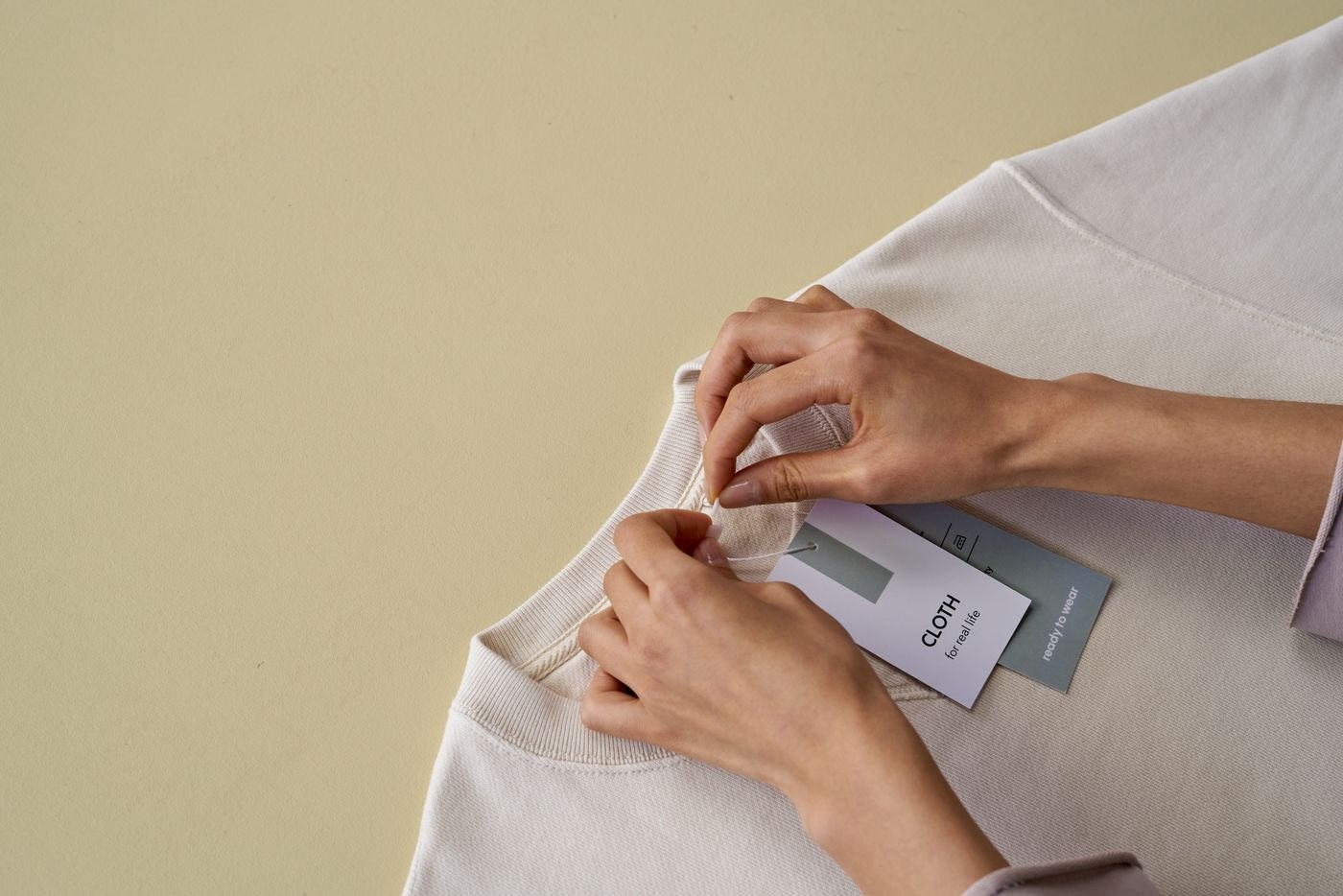
A shirt can be cotton and still need different treatment from the cotton towels beside it. Colour, trims, interlining and finishing all belong to the finished garment. Look for the sewn-in label, usually along a side seam, and read any written instructions as well as the symbols. If the label has faded, search the maker’s information using the garment reference rather than guessing from its feel.
Keep a photograph of a legible label if you intend to remove it because it scratches. Include the product reference in the same photograph. This is particularly useful when two similar shirts require different care; memory tends to merge them into one ordinary white shirt.
Temperature is not the whole cycle
GINETEX explains that the number inside the washing tub is a maximum temperature, not an instruction to choose the hottest available programme. Bars beneath the tub indicate gentler mechanical treatment. Selecting a lower temperature on an otherwise vigorous programme does not necessarily provide the gentleness indicated by those bars.
Read the drying and ironing instructions before starting the wash. A shirt that must dry flat needs suitable space, while a garment that cannot be tumble dried should not end up in a mixed dryer load by accident. The ironing limit comes from the care label rather than the familiar cotton setting on the appliance.
Turn the instructions into a complete plan
Imagine two pale shirts waiting for the same load. One permits a normal wash, the other requires a gentler process and a different drying method. Similar colour does not make their care identical. Decide whether the load can safely satisfy both sets of instructions; if not, separate them. Do not choose a compromise simply because both shirts fit inside the drum.
A written restriction deserves attention alongside the symbols. Detachable parts, decorative printing or an unusual finish can have additional directions. Check whether an instruction applies to the whole shirt or a removable component. If the wording and symbols appear inconsistent, ask the manufacturer instead of selecting whichever is more convenient.
Keep the distinction between permission and necessity. A label may permit a treatment without requiring it after every wear. Decide whether the shirt needs cleaning from its condition, while using the label to limit how that cleaning is done. This avoids both unnecessary treatment and the opposite mistake of ignoring a dirty collar because an arbitrary wear count has not been reached.
Prepare the actual shirt
Empty the pockets, remove detachable collar stays where appropriate and check for loose buttons. Examine a mark before washing: tell a cleaner about an uncertain stain rather than experimenting with several products. Any pretreatment should be compatible with both the garment and the treatment’s instructions; a white surface is not automatic permission to use bleach.
Sort by compatible care requirements and colour, not just by the word shirt. Leave enough room for the selected programme to work as intended. Once the cycle finishes, follow the drying instruction promptly rather than leaving the garment compressed in the drum. If a symbol remains unclear, pause and consult the official reference or the manufacturer. An extra minute identifying it is easier than trying to reverse a damaged finish.