Fit & fabrics
Shirt collars with and without a tie
Test the collar in the way you intend to wear it, including the layer above.
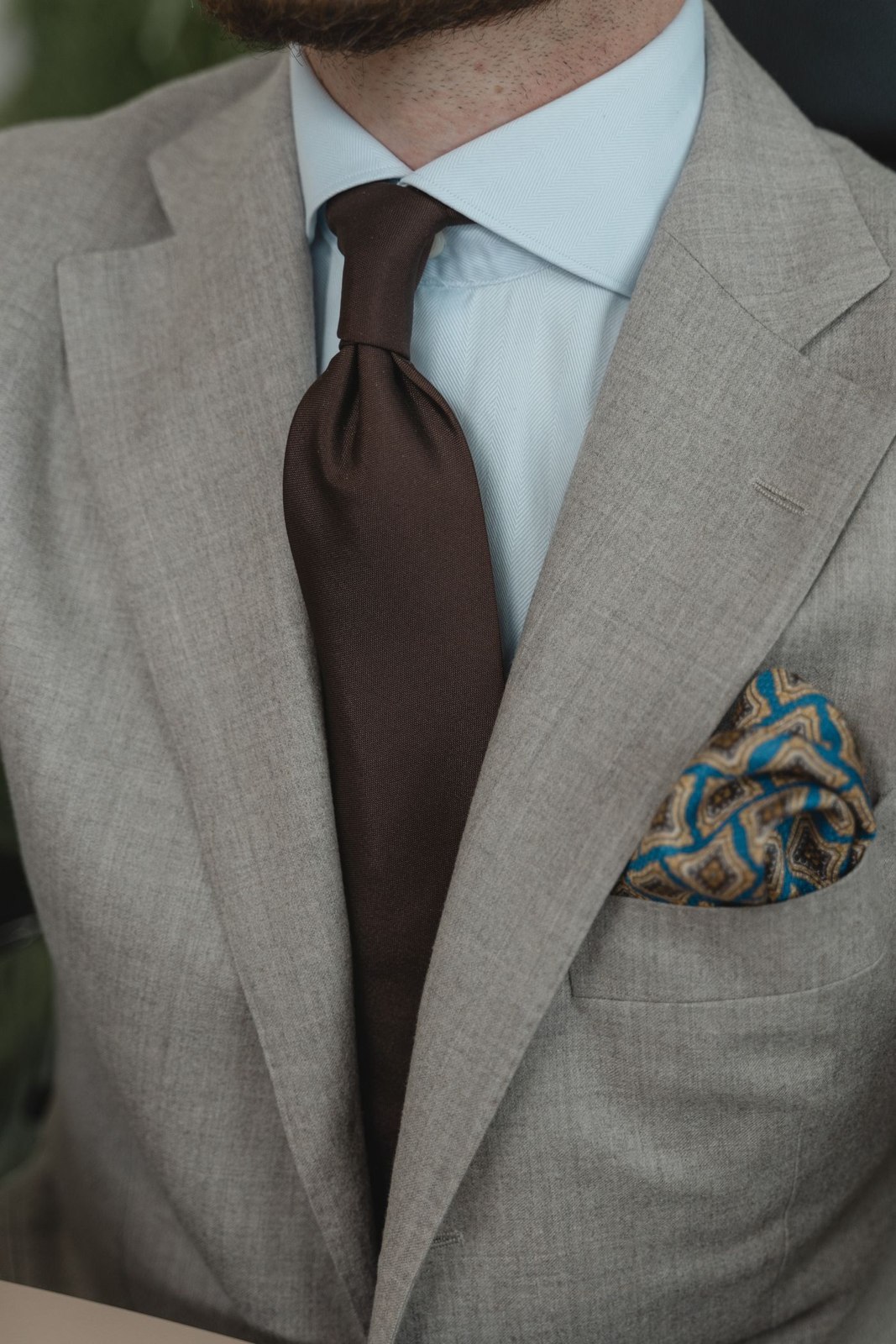
Fasten it if a tie is part of the plan
A collar that feels comfortable open may be restrictive when the top button is fastened. Try it closed before buying a shirt for tie wear. Turn your head, look down and swallow normally. There should be room for ordinary movement without a large gap that makes the tie appear to suspend the collar.
A familiar finger-width rule can be a rough starting point, but fingers, neck shapes and preferences differ. Comfort in motion is more informative than passing a single measurement test. Check the collar after the shirt has settled on your shoulders, rather than pulling it forward to create temporary space.
Match the knot to the available space
Collar spread and point length influence how a tie sits. Try a knot that fills the opening without forcing the collar apart or disappearing behind it. The tie’s thickness matters as much as the knot’s name; the same knot in two fabrics can produce different volume.
Look at the collar under the actual jacket or knit. Points that sit neatly on their own may lift above a crew neck or crowd a narrow lapel. Do not choose a shirt only from a close-up of the collar, because the relationship with the shoulder and chest also changes the result.
Assess the open version separately
Without a tie, undo the number of buttons you would normally leave open and let the collar fall naturally. A stiff formal collar may stand away from the chest, while a softer one can spread more easily. Neither is inherently wrong; decide whether the effect suits the outfit rather than trying to force one collar to perform every role.
A button-down can keep its points contained, but it is not the only casual option. Check that an open collar does not pull the front placket sideways or expose more than you want when sitting. If the shirt must serve both uses, test both fully. A modest compromise can work, but buying for an imagined formal occasion while disliking the everyday open shape is rarely a useful balance.