Fit & fabrics
Room through the thigh in straight trousers
A straight leg needs enough space above the knee to fall as intended.
Straight is a shape, not a promise of room
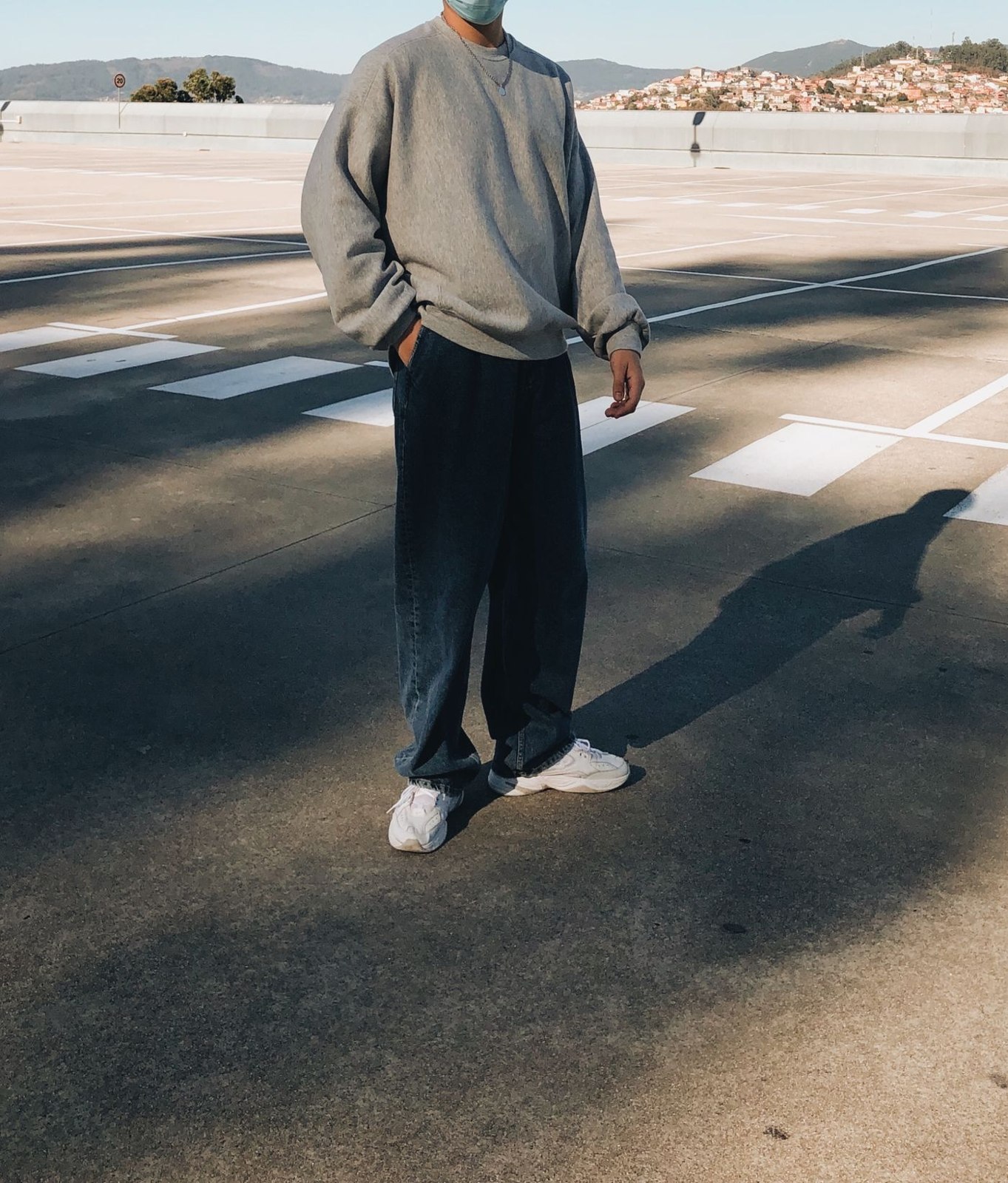
The label straight describes a general leg direction, not a guaranteed amount of thigh space. One brand’s straight trouser may be close through the upper leg, another considerably relaxed. Look at the fabric between hip and knee rather than assuming the name resolves the fit.
With your pockets empty, stand naturally and notice whether the cloth hangs or grips. Horizontal strain, spreading pocket openings and a crease that pulls off line can be clues, but none should be read in isolation. Fabric stiffness, pocket construction and posture also affect what you see.
Sit before deciding
Use an ordinary chair and bend your knees. The trousers should allow the movement your day requires without making the thigh feel bound. Try walking up a step if the fitting area permits it. A little movement in the fabric is normal; relying entirely on stretch to escape restriction is a different matter.
Check the seat and rise at the same time. Pressure through the upper leg may be related to the way the trousers sit at the waist. Pulling them lower can temporarily relieve one area while creating another problem. Let the garment settle into its intended position before comparing sizes.
Use the pockets as a second check
After the empty-pocket test, add the few items you normally carry, provided the fitting conditions permit it. A phone can change the way a front pocket lies, but it should not turn a comfortable thigh into a trapped one. If the fabric is already stretched before anything is added, daily use is unlikely to improve the arrangement.
Compare the side view while sitting. A pocket bag can bunch inside even when the outer cloth seems generous. Smooth it once and repeat the movement. If the problem immediately returns, inspect the pocket construction rather than repeatedly rearranging it during every wear.
Do not confuse a full thigh with a need for an oversized waist. Some cuts deliberately provide more room through the seat and upper leg while keeping the waistband relatively close. Conversely, a large waist size can still have a narrow thigh. When asking a retailer for measurements, request the thigh at a specified point below the crotch and compare with a known pair using that same point. This makes the question concrete and avoids relying on names such as regular or athletic.
Choose a cut, not a workaround
If the next waist size provides thigh room but becomes loose at the top, look for a roomier thigh cut or discuss a modest waist adjustment with a tailor. Do not assume every trouser has enough seam allowance to be let out later. Ask before purchasing on that basis.
Notice how the leg falls from the newly comfortable thigh to the shoe. A straighter, slightly wider opening may balance the extra room more naturally than a sharply narrowed hem. Try the intended footwear and walk again.
The useful result is a line that remains recognisably straight in ordinary movement, with pockets that can be used and a seat you can sit in. It need not be oversized, and it need not hide every fold. A trouser that looks clean only while you stand rigidly with empty pockets is not yet a successful everyday fit.