Fit & fabrics
Reading a clothing composition label
Use the fibre list to ask better questions, not to assign an instant quality score.
Separate the material from the product name
A description such as wool-look, silky or denim-style does not necessarily identify the fibres in the garment. Find the composition information and read the named materials and percentages. Treat a marketing description of appearance separately from what the label says is present.
Where shell, lining and other components are listed separately, keep those distinctions. A jacket advertised for its wool outer may have a different lining, which is the layer touching your shirt. The composition of one component should not be assumed to describe the whole garment.
Percentages do not explain every property
A fibre percentage can help identify a blend, but it does not reveal yarn quality, weave, thickness, finishing or workmanship. Two garments with the same listed composition can feel and perform differently. Inspect the actual cloth and construction rather than ranking them solely by the largest number.
A small elastic component may influence movement, but the cut still determines whether there is enough room. A natural fibre label does not guarantee comfort for every person or use. Similarly, a synthetic component is not evidence by itself that a garment is unsuitable. Ask what the complete fabric needs to do: hold a shape, slide under a jacket, offer opacity or feel comfortable against the skin.
Read care as a separate instruction
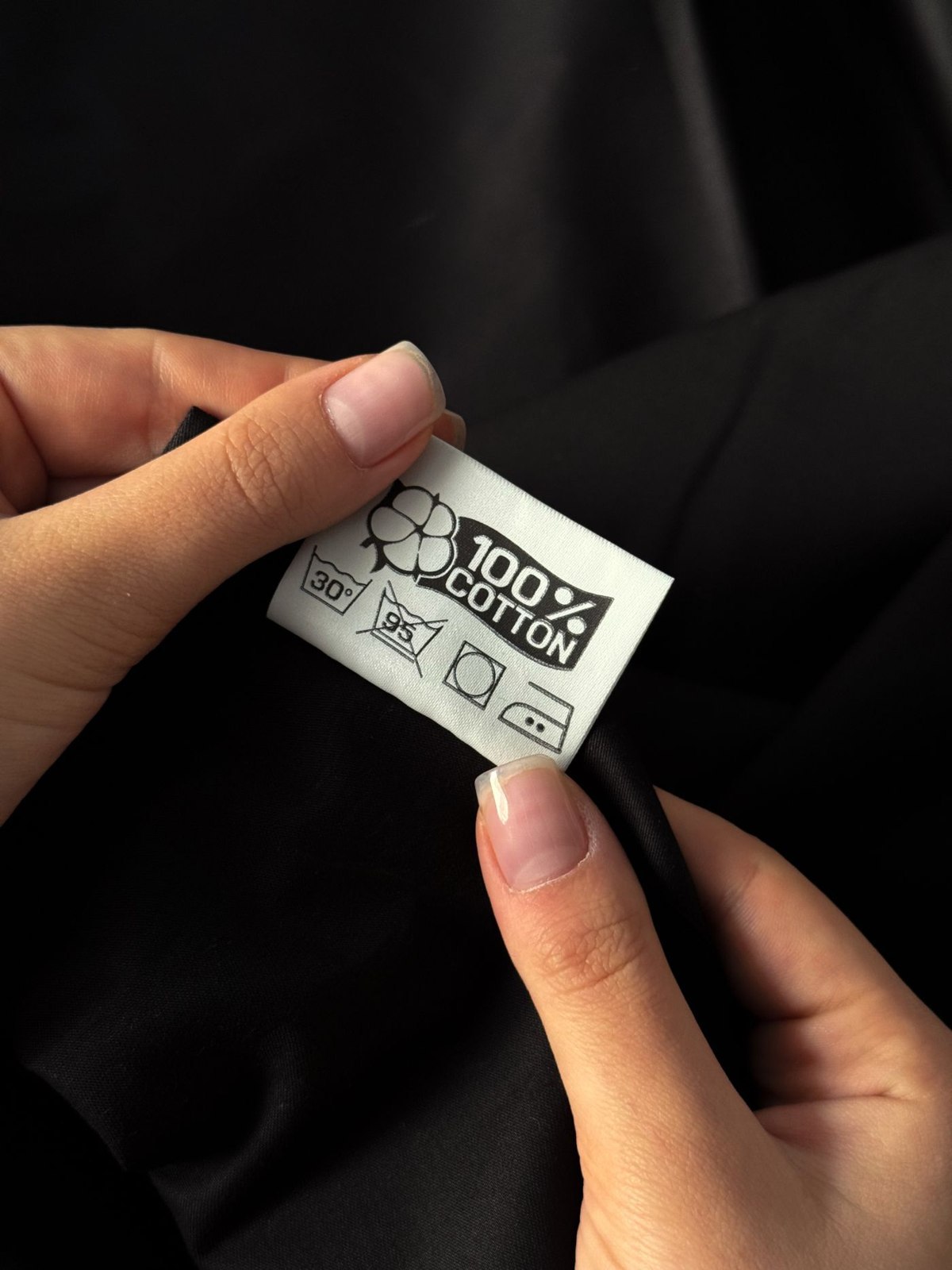
Do not convert a composition into your own washing programme. Trims, dyes, linings and construction can limit treatment. Follow the complete garment’s care label and manufacturer guidance. The fibre list and care instructions answer related but different questions.
For online shopping, look for the composition of the exact colour or version being considered; product variants can differ. If important information is missing, ask before buying. A photograph of the sewn-in label can be especially useful for second-hand clothing.
Translate the label into a try-on question
Suppose a shirt lists cotton and elastane. Instead of concluding that it must be comfortable, ask whether the shirt has enough room before the fabric stretches. If a coat lists wool outside and a different lining inside, test the coat over your normal layers and feel how the sleeve moves. Each label detail should lead to a useful inspection, not an automatic verdict.
For a blend with several fibres, avoid assigning every sensation to the highest percentage. The face of a fabric, its backing and its finishing can influence what you feel. You can describe your observation accurately—smooth, firm, flexible or irritating—without claiming to have identified the exact technical cause. This keeps a purchase decision grounded in the garment rather than a speculative material explanation.
If a seller uses a broad term that differs from the sewn label, ask for clarification before assuming either a mistake or a special advantage. Keep screenshots or product information for your own purchase reference where useful. The aim is a clear understanding of what is being offered, not a more complicated vocabulary that makes the actual choice harder.
Use the information without overclaiming
Composition alone does not establish where the garment was made, how workers were treated or whether a particular environmental claim is justified. Those questions require separate evidence. Avoid turning a fibre preference into a claim about the entire production chain.
Combine the label with a physical check, intended use and realistic care routine. If a fabric feels uncomfortable, the percentage of a favoured material is not a reason to ignore that. If a blend works well, it need not be dismissed for failing an arbitrary purity test. The label is most useful when it makes your choice more informed, not when it replaces looking at the garment itself.
Keep similar garments separate
When replacing a favourite, photograph its composition and care labels together with the garment itself. Two nearly identical shirts can belong to different seasons or fabric versions. A remembered brand name and colour may not identify the same material. Compare the current product information rather than assuming the familiar model name guarantees an unchanged fabric.
For a garment with a missing or unreadable label, avoid guessing the composition from touch with certainty. A seller or maker may have the original specification, but if it cannot be established, treat it as unknown. That matters particularly when deciding care. Choose appropriate professional advice instead of turning a visual resemblance into a washing instruction. Uncertainty is a useful piece of information when it prevents an irreversible treatment based on a confident but unsupported assumption.