Outfits
Patterned shirt and plain trousers
Give the pattern a clear setting, then decide how much of it you want to show.
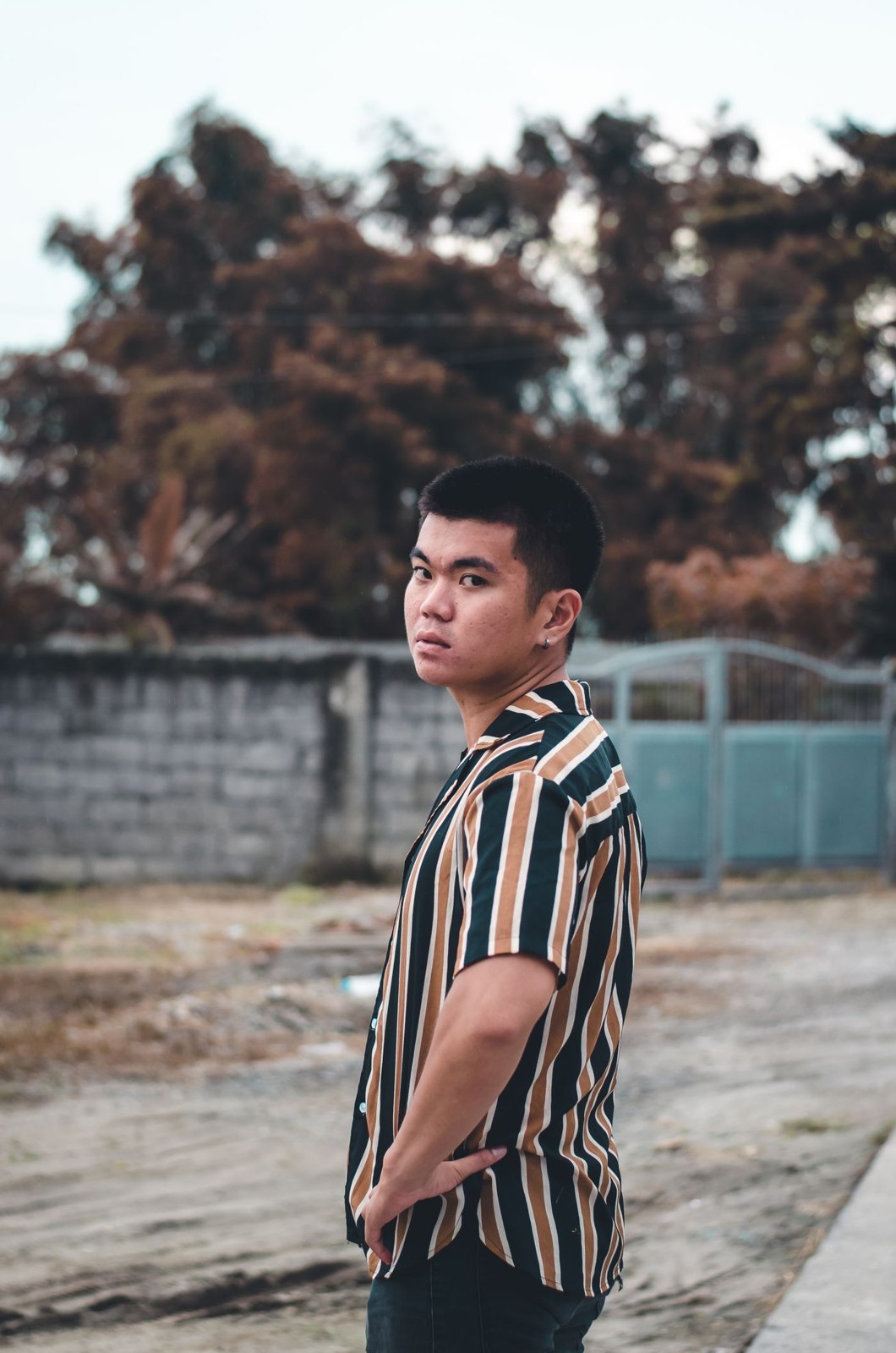
Read the shirt from a distance
A pattern that looks intricate in your hand may become a single colour from across a room. Conversely, a large print can remain the first thing anyone notices. Try the shirt on and step back from the mirror before choosing trousers. Decide whether you want the pattern to lead the outfit or simply add surface interest to an otherwise quiet combination.
The background colour is often a useful starting point. Navy trousers beneath a shirt with a navy ground can connect the pieces without copying every small colour in the print. Alternatively, choose a plain neutral that gives the shirt space. You do not need to find trousers in the least obvious accent colour to demonstrate that you noticed it.
Control the amount of visible pattern
Wearing the shirt tucked in creates a shorter, contained block. Leaving it out gives the print more area, so the hem and length become especially important. A shirt designed with long tails may not hang as easily as a straight-hemmed casual version. Check the side view and make sure the pattern is not hiding most of the trousers.
An open plain jacket can reduce the visible area without concealing the shirt completely. This is useful if a new print feels more assertive than expected. The jacket should still work when removed, however; do not rely on keeping it on all evening to tolerate the shirt underneath. Choose a pattern you actually enjoy rather than one you hope to disguise.
Keep the lower half calm
Plain trousers do not have to be featureless. A crease, gentle pleat or textured cloth can provide structure without competing with the print. Strong distressing, large cargo pockets and contrast stitching each introduce additional information, so consider whether you want that much happening below a patterned top. Simpler shoes can help preserve a clear focal point.
Accessories need not repeat the print. A quiet belt and familiar shoes are enough for many outfits. If you add a patterned scarf or tie, compare the scales deliberately rather than assuming all patterns clash or all combinations work. For a first attempt, let the shirt do the talking. Once that version feels comfortable, you can decide whether another layer of visual detail genuinely improves it.