Wardrobe
A linen shirt with long sleeves
Leave enough ease for the cloth to move, and treat creases as part of the decision rather than a surprise.
Why long sleeves can still make sense
A long-sleeved linen shirt offers more ways to adjust an outfit than a short-sleeved one. The cuffs can remain closed under a light jacket, or the sleeves can be rolled when the setting feels more relaxed. That flexibility does not depend on a promise that every linen shirt will feel cool. Fabric weight, weave, fit and the conditions all influence comfort.
Start with enough room through the body that the shirt does not cling or pull when you sit. Very wide sleeves can be difficult to roll neatly, while very narrow ones may become tight at the forearm. Try both the closed cuff and a loose roll before choosing. Do not assess the shirt only in the single pose used by a product photograph.
Look through the cloth
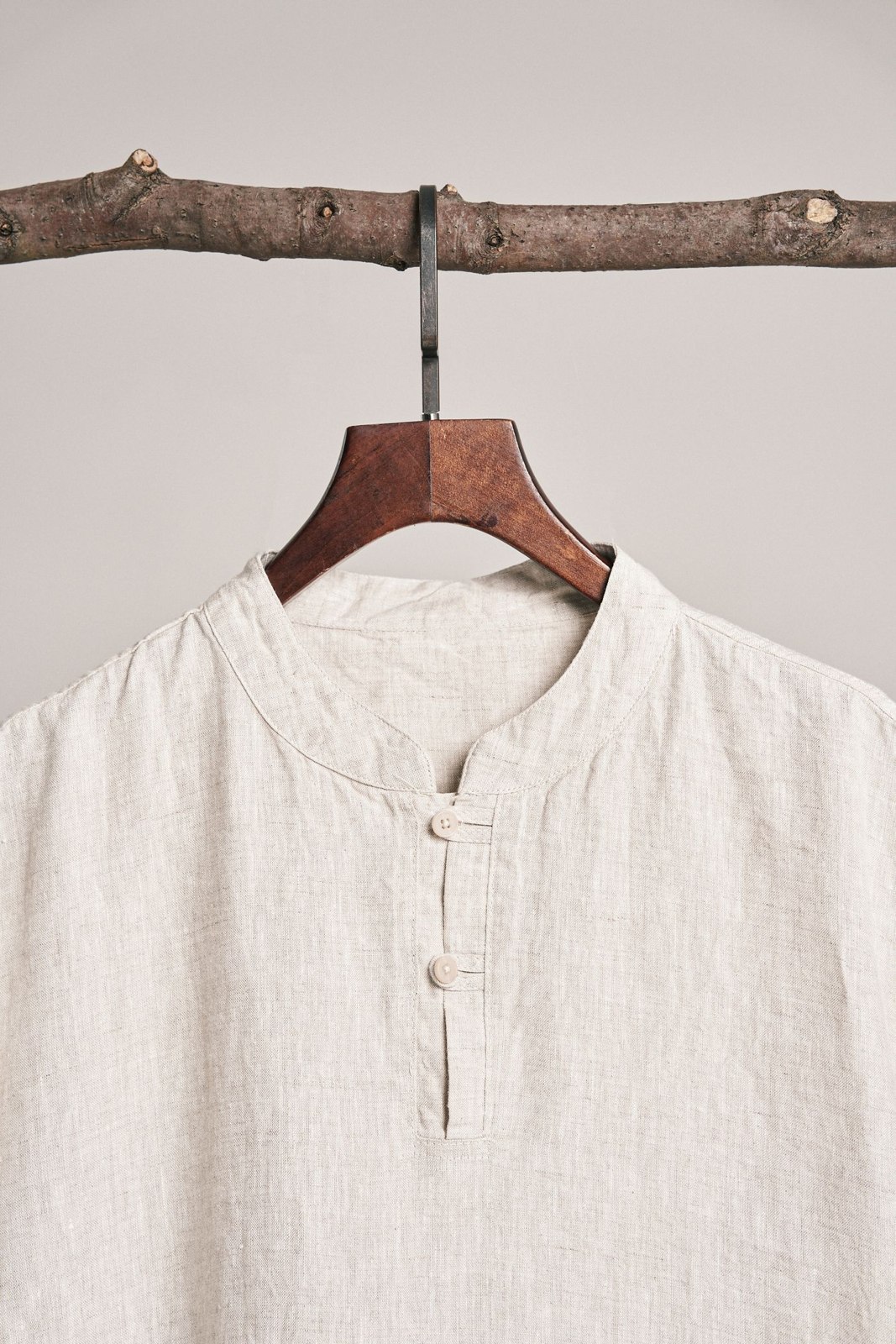
Pale linen can be translucent, particularly in strong light. Check the effect while wearing it, not just against a dark changing-room wall. An undershirt changes both coverage and the appearance of the neckline, so include it in the fitting if you plan to use one. A slightly darker colour or denser cloth may solve the issue without another layer.
The collar also matters. A soft collar can suit an open neckline, but it may not behave like a crisp business-shirt collar under a jacket. If you need the shirt for a particular event, try the complete outfit. Linen is a fibre choice, not a dress code, and the garment's details can move it towards either casual or more considered clothing.
Let the finish fit your expectations
Creases will become part of the visual surface during wear. If you want a permanently smooth front, ask whether this is the right shirt for that role. A little texture can look natural with relaxed cotton trousers or shorts; the same amount may bother you in an otherwise sharply pressed outfit. Make that decision before buying, not halfway through an event.
Follow the garment's own cleaning and ironing instructions. Blends, trims and construction can change what is appropriate, so the fibre name alone is not enough. When hanging the shirt after wear, give it space to air rather than crushing it between tightly packed clothes. For styling, begin with a plain trouser and simple shoes; the cloth already has a visible character of its own.